
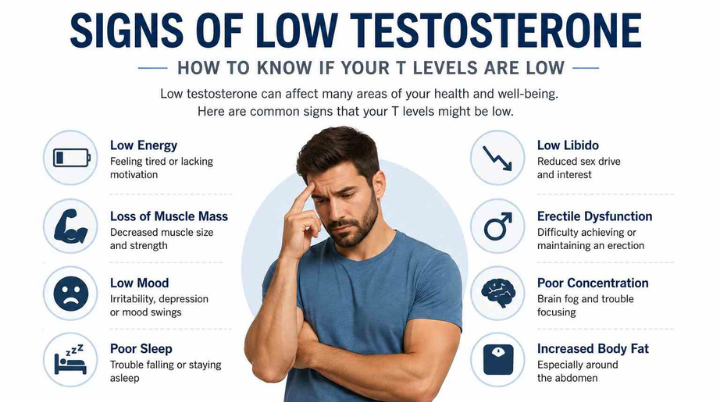
Signs of Low Testosterone: How to Know If Your T Levels Are Low
May 23, 2026Introduction
Something feels off. You wake up tired even after a full night of sleep. Your drive in the gym is gone. Your interest in sex has quietly faded. Your mood shifts without warning and you find yourself snapping at people for no real reason. You chalk it up to stress or age. But what if it is something more specific?
For millions of men these are not just random bad days. These are signs of low testosterone and they are more common than most people realize. Testosterone is the hormone that shapes almost everything about how a man feels physically and mentally. When levels drop the effects touch every area of life.
This guide walks you through what low testosterone actually feels like, what causes it, how it gets diagnosed and what your options are. If any of this sounds familiar you are in the right place.
What Is Testosterone and Why It Matters
Testosterone is the primary male sex hormone. It is produced mainly in the testes with a small amount coming from the adrenal glands. During puberty it drives the development of male characteristics including muscle growth, body hair, voice deepening and reproductive organ development.
In adult men testosterone continues to play a central role in a wide range of functions. It regulates sex drive. It controls sperm production. It maintains bone density and muscle mass. It influences mood, energy, mental focus and even cardiovascular health.
Testosterone levels naturally peak in early adulthood and begin to decline gradually from around age 30 onwards. According to research published in the Journal of Clinical Endocrinology and Metabolism this decline is approximately 1 to 2 percent per year. For most men this gradual change goes unnoticed. But for others the drop reaches a point where it starts to affect daily life significantly.
Clinically low testosterone is referred to as hypogonadism or more commonly low T. It is diagnosed when total testosterone levels fall below 300 nanograms per deciliter according to guidelines from the American Urological Association. However symptoms can appear even at levels above this threshold in some men.
[IMAGE SUGGESTION: A simple infographic showing testosterone levels by age decade from 20s to 60s. Bar chart or line graph style. Clean medical design.]
Common Signs of Low Testosterone
Low testosterone does not announce itself with one obvious symptom. It tends to creep in gradually across multiple areas of your health and wellbeing. Many men dismiss the early signs as just getting older or being stressed. The problem with that approach is that untreated low T tends to get worse over time.
Here are the most common and clinically recognized low testosterone symptoms that men experience.
1. Low Energy and Constant Fatigue
This is usually the first thing men notice. Not the normal tiredness you feel after a hard day at work. This is a deeper kind of exhaustion that does not go away after sleep. You wake up already feeling drained. Getting through the afternoon without feeling like you need to lie down becomes a real challenge.
Testosterone plays a direct role in energy metabolism. It supports red blood cell production and mitochondrial function in muscle cells. When levels drop these processes slow down. The result is a persistent low level fatigue that has no obvious explanation.
A study published in the Journal of Clinical Endocrinology found that men with low testosterone reported significantly higher rates of fatigue and reduced physical vitality compared to men with normal levels. Addressing the underlying hormonal issue often leads to a notable improvement in energy within weeks.
2. Reduced Sex Drive and Performance Issues
Testosterone is the primary driver of male libido. When levels drop so does sexual desire. This is not just about frequency. It is about the total loss of interest in sex that many men with low T describe. Things that used to be naturally arousing simply stop triggering a response.
Beyond libido low testosterone is also strongly connected to erectile dysfunction. While ED has multiple causes testosterone plays a supporting role in the vascular and neurological processes that allow erections to form. Men with low T often find that keeping an erection during sex becomes increasingly difficult.
It is worth noting that low testosterone is not the only cause of ED. Anxiety, cardiovascular health, lifestyle factors and other hormonal issues all play a role. A proper evaluation helps identify what is actually driving the problem so treatment can be targeted correctly.
3. Mood Changes Irritability and Depression
Testosterone has a significant impact on the brain. It influences the production and regulation of neurotransmitters including serotonin and dopamine which are directly tied to mood stability and emotional wellbeing. When testosterone drops men often experience mood changes that feel completely out of character.
Irritability is one of the most commonly reported symptoms. Small frustrations that would normally roll off lead to disproportionate reactions. Some men describe feeling emotionally flat rather than angry, a kind of grey numbness where nothing feels particularly enjoyable or motivating.
Clinical depression is also significantly more common in men with low testosterone. A large review published in JAMA Psychiatry found a strong bidirectional relationship between low testosterone and depression in men. Treating the hormonal deficiency often improved mood outcomes alongside other interventions.
If you have noticed personality changes that you or your partner cannot explain it is worth considering whether hormonal health may be part of the picture.
4. Loss of Muscle Mass and Physical Strength
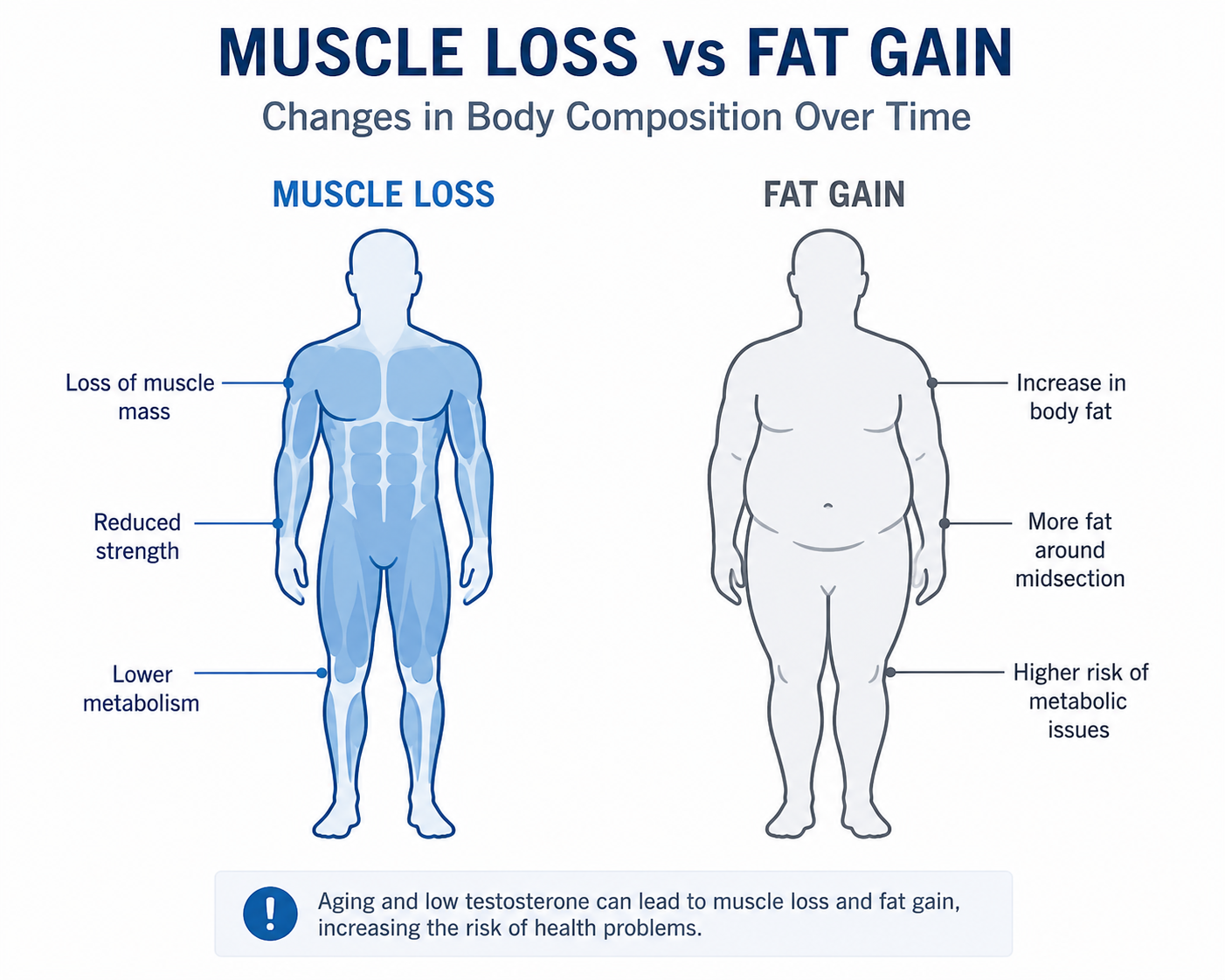
Testosterone is the key anabolic hormone in the male body. It signals muscle tissue to grow and repair. It supports protein synthesis and keeps the body in a state where building and maintaining muscle is possible. When testosterone levels fall this anabolic signal weakens.
Men with low T often notice that workouts stop producing results. They may be training just as hard as before but the gains have stalled or reversed. Existing muscle begins to shrink even with regular exercise. Overall physical strength declines in a way that seems disproportionate to age.
This loss of muscle is not just a cosmetic concern. Muscle mass is closely tied to metabolic health insulin sensitivity and long term mobility. The connection between low testosterone and declining physical performance is one of the most well documented aspects of testosterone deficiency in the medical literature.
5. Increased Body Fat
As muscle mass decreases body fat tends to increase. This is partly because muscle tissue burns calories even at rest. Less muscle means a slower metabolism which makes fat accumulation easier and fat loss harder.
There is also a hormonal dimension to this. Testosterone and estrogen exist in balance in the male body. When testosterone drops the relative proportion of estrogen increases. Elevated estrogen in men promotes fat storage particularly around the chest and abdomen. Some men with low T develop gynecomastia which is the growth of breast tissue.
The fat gain associated with low testosterone tends to be concentrated around the belly. This is concerning beyond appearance because visceral abdominal fat is strongly associated with cardiovascular disease, insulin resistance and metabolic syndrome.
6. Brain Fog and Difficulty Concentrating
Testosterone receptors exist throughout the brain including in areas responsible for memory, attention and executive function. When testosterone is low cognitive performance often suffers in ways that are subtle but frustrating.
Men describe it as a mental cloudiness. Thoughts that used to come quickly now feel slower. Remembering names, dates or tasks that should be routine becomes harder. Focusing during meetings or conversations requires more effort. Motivation for mentally demanding work decreases.
Research published in Neurology has found associations between low testosterone and increased risk of cognitive decline in older men. In younger and middle aged men the effect tends to manifest as reduced mental sharpness and productivity rather than serious cognitive impairment. Either way it affects quality of life.
7. Poor Sleep and Slow Recovery
Testosterone and sleep have a two way relationship. Most testosterone production happens during deep sleep particularly during REM cycles. Poor sleep leads to lower testosterone output the next day. Lower testosterone in turn makes it harder to get quality deep sleep. It becomes a cycle that feeds itself.
Men with low testosterone often report difficulty falling asleep, waking during the night or feeling unrefreshed even after spending enough hours in bed. Some research has also linked low testosterone to increased risk of sleep apnea which further disrupts the hormonal recovery that happens during sleep.
Recovery from exercise also slows down. Testosterone supports tissue repair and reduces post workout inflammation. Men with low T often feel sore for longer after training and find that their body simply does not bounce back the way it once did.
8. Hair Loss and Physical Changes
Testosterone is converted in the body to a more potent hormone called dihydrotestosterone or DHT. DHT is responsible for body and facial hair growth. Low testosterone can lead to reduced body and facial hair though this varies considerably between individuals based on genetics.
Other physical changes associated with low testosterone include reduced testicular size, decreased bone density and in some cases decreased semen volume. These changes can be gradual and easy to overlook but they are clinically significant markers of hormonal health.
Bone density loss is particularly worth noting because it increases the risk of fractures and osteoporosis over time. Testosterone directly stimulates bone mineralization and this protective effect diminishes as levels fall.
What Causes Low Testosterone?
Understanding the causes of low testosterone helps explain why it is becoming increasingly common even in younger men. The causes fall into two broad categories: primary and secondary hypogonadism.
Primary Hypogonadism
This is when the testes themselves fail to produce adequate testosterone. Causes include injury or infection to the testicles certain genetic conditions like Klinefelter syndrome undescended testicles and damage from chemotherapy or ED treatment.
Secondary Hypogonadism
This is when the problem originates in the brain. The hypothalamus or pituitary gland fails to send the correct hormonal signals to the testes. Causes include obesity, type 2 diabetes, chronic stress, sleep disorders, certain medications and inflammatory diseases.
Lifestyle Factors
Beyond medical conditions a range of everyday lifestyle factors can suppress testosterone production significantly. These include:
- Chronic sleep deprivation which directly reduces daily testosterone output
- Obesity particularly excess visceral fat which converts testosterone to estrogen
- Excessive alcohol consumption which impairs testicular function
- Chronic psychological stress which elevates cortisol and suppresses testosterone production
- Sedentary lifestyle and lack of resistance training
- Poor diet particularly one low in zinc, vitamin D and healthy fats
- Overtraining without adequate recovery
Normal vs Low Testosterone: Key Differences at a Glance
| Health Area | Normal Testosterone | Low Testosterone |
| Energy Level | Consistent throughout the day | Persistent fatigue even after rest |
| Sex Drive | Regular and reliable libido | Significantly reduced or absent |
| Muscle Mass | Maintained with normal activity | Gradual loss despite training |
| Mood | Generally stable | Irritable, flat or depressed |
| Body Fat | Manageable with healthy diet | Increasing especially around abdomen |
| Mental Focus | Sharp and consistent | Foggy, slower, reduced motivation |
| Sleep Quality | Restorative and consistent | Disrupted or unrefreshing |
| Erectile Function | Reliable with arousal | Reduced firmness or frequency |
| Bone Density | Maintained | Gradual decline over time |
How Low Testosterone Is Diagnosed
The only reliable way to confirm low testosterone is through a blood test. A serum total testosterone test measures the total amount of testosterone in your blood. Because testosterone levels fluctuate throughout the day with the highest point typically in the morning testing is usually done in the morning between 7am and 10am.
A single low reading is not always enough for a diagnosis. Most guidelines recommend two separate tests on different days before a definitive diagnosis is made. Your doctor may also measure free testosterone, luteinizing hormone, follicle stimulating hormone, sex hormone binding globulin and prolactin to get a complete picture of your hormonal health.
Additional assessments may include a complete blood count, thyroid function tests, liver function tests and metabolic panel. These help identify whether low testosterone is causing secondary health effects or whether another underlying condition is contributing to low T.
Treatment and Lifestyle Improvement Options
Treatment for low testosterone depends on the cause severity and the individual’s overall health. There is no one size fits all approach. A qualified healthcare provider will evaluate all of these factors before recommending a course of action.
Lifestyle Changes First
For men with mildly low testosterone or borderline levels lifestyle changes alone can produce meaningful improvement. The most impactful changes include
- Prioritizing 7 to 9 hours of quality sleep every night
- Incorporating regular resistance training at least 3 to 4 times per week
- Reducing body fat through a balanced diet and consistent activity
- Cutting back significantly on alcohol
- Managing chronic stress through evidence based techniques
- Optimizing nutrition with adequate protein, zinc, vitamin D and healthy fats
- Reducing exposure to endocrine disrupting chemicals found in plastics and certain personal care products
Testosterone Replacement Therapy
For men with clinically confirmed low testosterone and significant symptoms testosterone replacement therapy or TRT may be recommended. TRT is available in several forms including injections, topical gels, skin patches and implantable pellets.
TRT is effective at restoring testosterone levels and relieving symptoms in most men. However it is not without risks and is not appropriate for everyone. It can affect fertility, red blood cell count and cardiovascular health depending on the individual. This is why medical supervision is essential throughout treatment.
Addressing ED Alongside Low T
For men experiencing both low testosterone and erectile dysfunction treatment often involves addressing both issues simultaneously. Testosterone therapy alone does not always fully resolve ED. In those cases FDA approved ED medication options may be used alongside hormonal treatment to restore full sexual function.
Men dealing with performance anxiety alongside low T will also benefit from psychological support because the two conditions reinforce each other and both need to be addressed for a full recovery.
When to See a Doctor
You should speak with a healthcare provider if you have been experiencing several of the symptoms described in this article for an extended period. A single symptom in isolation is not necessarily diagnostic but a cluster of symptoms including fatigue, low libido mood changes and muscle loss is a strong signal worth investigating.
In particular see a doctor promptly if
- Your sex drive has dropped significantly and stayed low for several weeks or months
- You are experiencing erectile dysfunction that is becoming more frequent
- You have noticed unexplained weight gain around the abdomen alongside fatigue
- Your mood has changed noticeably and is affecting your relationships or work
- You have lost significant muscle mass despite maintaining your exercise routine
- You are experiencing depression that does not respond to conventional approaches
Early diagnosis leads to better outcomes. Low testosterone that goes untreated for years can lead to bone density loss, cardiovascular complications and persistent metabolic problems that are harder to reverse. Getting checked is straightforward and the information it gives you is valuable regardless of the result.
Final Thoughts
Low testosterone is not an inevitable part of getting older that you simply have to accept. It is a medical condition with identifiable causes and effective treatments. The symptoms are real, they are impactful and they are worth taking seriously.
If you have been living with unexplained fatigue, fading sexual desire, mood swings, muscle loss or mental fogginess for longer than a few weeks it is worth getting your testosterone levels checked. A simple blood test is all it takes to get clarity.
Understanding your hormonal health gives you options. Whether the solution is lifestyle changes, medical treatment or a combination of both the outcome for most men who address low testosterone proactively is significantly better than for those who ignore it.
For men also dealing with erectile dysfunction and testosterone issues together there are safe and well studied treatment pathways available. The right starting point is always a conversation with a qualified healthcare provider.
Ready to Take Control of Your Hormonal Health?
You do not have to keep feeling this way. Whether you are dealing with low energy, reduced sex drive, mood changes or performance issues there are practical steps you can take starting today. Explore our resources on men’s sexual health treatments and learn about ED medication options that may support your recovery alongside professional medical guidance. Your health is worth the conversation.
FAQs
Q: What is considered a low testosterone level?
According to the American Urological Association a total testosterone level below 300 nanograms per deciliter is considered clinically low. However some men experience significant symptoms at levels above this threshold. Diagnosis is based on both lab results and clinical symptoms together.
Q: Can low testosterone affect mental health?
Yes significantly. Low testosterone is associated with increased rates of depression, anxiety, irritability and cognitive difficulties such as poor concentration and memory. The relationship between testosterone and mental health is bidirectional meaning that poor mental health can also suppress testosterone production.
Q: Can young men have low testosterone?
Absolutely. While low testosterone becomes more common with age it is increasingly seen in men in their 20s and 30s. Poor lifestyle habits, chronic stress, obesity, poor sleep and environmental factors are all contributing to earlier onset of testosterone decline in younger generations.
Q: How is low testosterone treated?
Treatment depends on the cause and severity. Lifestyle changes including improved sleep, exercise, diet and stress management can raise testosterone levels meaningfully in some men. For clinically confirmed deficiency testosterone replacement therapy is the most effective medical treatment. Always consult a doctor before starting any treatment.
Q: Does low testosterone always cause erectile dysfunction?
Not always but there is a strong association. Testosterone supports the hormonal and vascular mechanisms involved in erections. Men with low T are significantly more likely to experience erectile dysfunction than men with normal levels. However ED has multiple causes and testosterone is just one of them. A full evaluation is needed to identify the specific contributors in each case.
Q: Can diet affect testosterone levels?
Yes. Diet has a measurable impact on testosterone production. Foods rich in zinc such as oysters, beef and pumpkin seeds support testosterone synthesis. Adequate vitamin D, healthy fats from sources like olive oil and avocado and sufficient overall caloric intake all support healthy hormone levels. Highly processed diets, excessive sugar and very low fat intakes tend to suppress testosterone production over time.
Medical References
- Bhasin S, et al. (2010). Testosterone Therapy in Men with Androgen Deficiency Syndromes. Journal of Clinical Endocrinology and Metabolism, 95(6), 2536-2559.
- Harman SM, et al. (2001). Longitudinal Effects of Aging on Serum Total and Free Testosterone Levels in Healthy Men. Journal of Clinical Endocrinology and Metabolism, 86(2), 724-731.
- Shores MM, et al. (2004). Low Serum Testosterone and Mortality in Male Veterans. Archives of Internal Medicine, 166(15), 1660-1665.
- Zarrouf FA, et al. (2009). Testosterone and Depression: Systematic Review and Meta-Analysis. Journal of Psychiatric Practice, 15(4), 289-305.
- Rajfer J. (2000). Relationship Between Testosterone and Erectile Dysfunction. Reviews in Urology, 2(2), 122-128.
- American Urological Association. (2018). Evaluation and Management of Testosterone Deficiency: AUA Guideline.
- National Institute on Aging. Testosterone and Older Men. U.S. National Institutes of Health.