
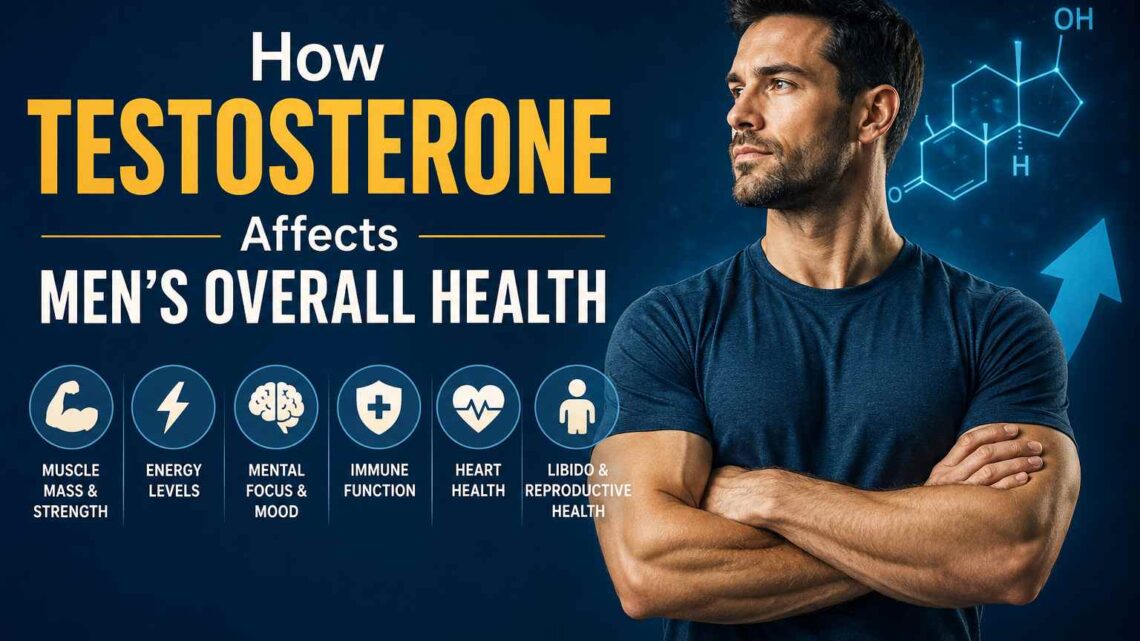
How Testosterone Affects Men’s Overall Health
May 17, 2026Testosterone is the most important hormone in a man’s body. It controls your sex drive, your ability to get and keep an erection, your energy levels, your mood, and even your body weight. When testosterone levels drop even slightly the effects show up fast.
The most common and most frustrating effect? Erectile dysfunction (ED). Millions of men experience it, and low testosterone is one of the leading causes. Yet most men do not connect the two. They assume ED is just stress or getting older and they never fix the real problem.
This guide breaks down exactly how testosterone affects your sexual health and overall wellbeing what the warning signs of low testosterone look like, and what treatment options are available including FDA approved ED medications that work even when testosterone levels are declining.
What Is Testosterone and Why Does It Matter?
Testosterone is a steroid hormone produced primarily in the testes. It controls male development from puberty onward body hair, muscle mass, voice and most importantly, sexual function.
In adult men, testosterone is responsible for:
- Sex drive (libido) the desire to have sex
- Erectile function getting and maintaining a firm erection
- Sperm production and fertility
- Muscle mass and physical strength
- Energy levels and mental focus
- Mood stability and emotional health
| Normal Testosterone Levels In adult men, normal testosterone ranges from 300 to 1,000 ng/dL. Levels below 300 ng/dL are considered low (hypogonadism). Testosterone begins declining at approximately 1% per year after age 30, meaning by age 50, many men have significantly reduced levels. |
How Low Testosterone Directly Causes Erectile Dysfunction
This is the connection most men miss. Testosterone does not just affect sex drive it plays a direct role in the physical mechanics of getting an erection. Here is how:
Testosterone Controls Nitric Oxide Production
Nitric oxide is a chemical that relaxes the blood vessels in the penis, allowing blood to flow in and create an erection. Testosterone directly stimulates nitric oxide production. When testosterone is low, less nitric oxide is made, blood flow to the penis is reduced, and erections become weaker or impossible.
Testosterone Drives Sexual Desire
Without sufficient testosterone, men experience a significant drop in libido the mental desire to have sex. Even if the physical mechanics work, low desire makes sexual performance difficult. This is often misread as sexual performance anxiety when the root cause is actually hormonal.
The Low T ED Cycle
Low testosterone leads to ED. ED causes frustration and stress. Stress raises cortisol, which further suppresses testosterone. This creates a self-reinforcing cycle that gets worse without treatment.
| Research Finding A major study published in the Journal of Clinical Endocrinology & Metabolism found that men with low testosterone were nearly twice as likely to experience erectile dysfunction compared to men with normal testosterone levels. |
If you are already dealing with ED read our detailed guide: What Causes Erectile Dysfunction? 7 Reasons & Proven Treatments.
| Struggling with ED? Get Fast, Discreet Relief FDA approved Viagra, Cialis & Super Vilitra delivered to your door in 3 days across the USA only at drjohnnysins . 👉 Browse ED Medications Now 👈 |
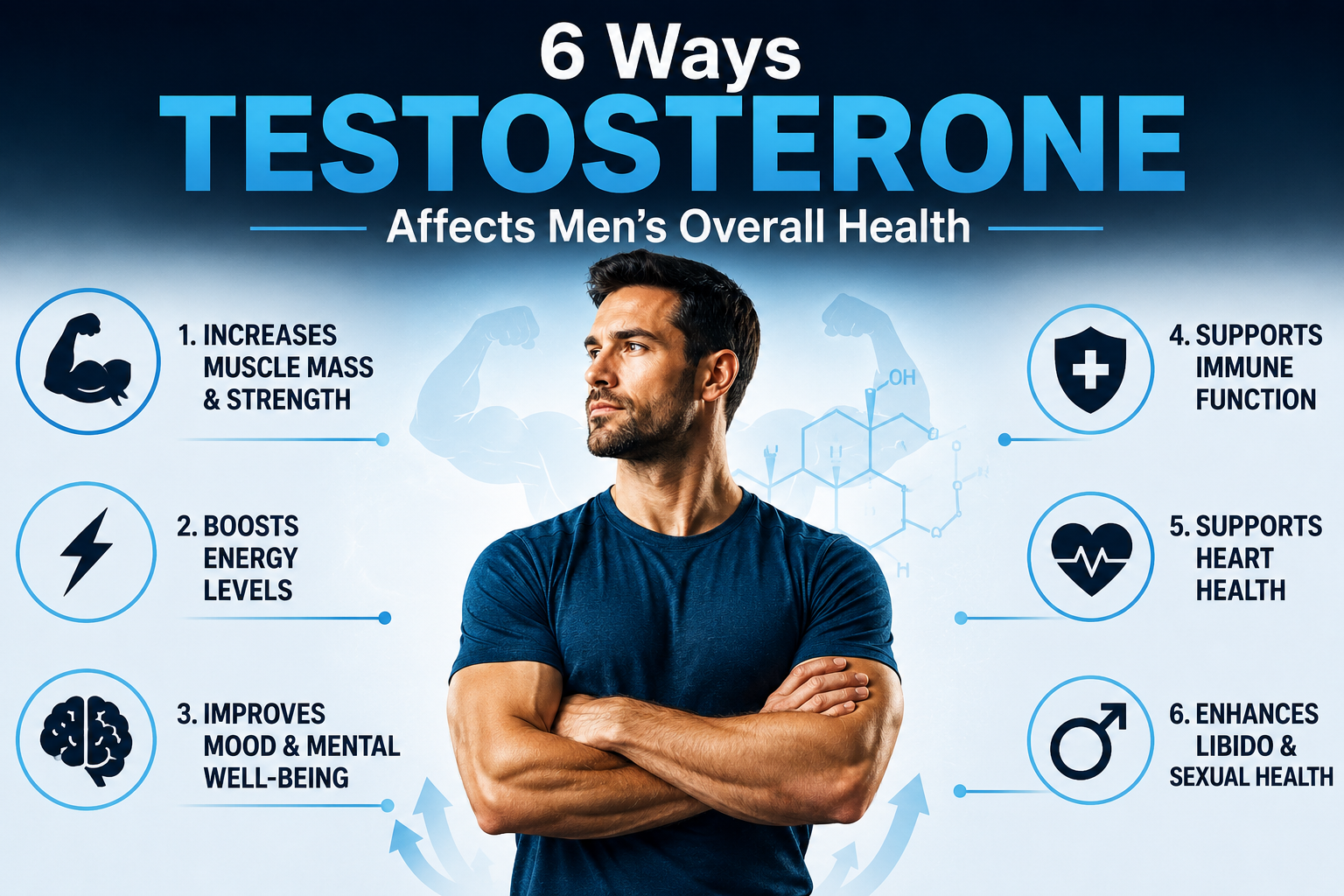
6 Ways Testosterone Affects Men’s Overall Health
1. Sexual Health & Libido
Testosterone is the primary driver of male sex drive. Even a modest decline in testosterone can cause a noticeable drop in sexual desire fewer thoughts about sex, less interest in intimacy, and difficulty becoming aroused. Combined with its effect on erectile function, low testosterone is one of the most common causes of losing erections during sex.
- Reduced sex drive and interest in intimacy
- Difficulty achieving or maintaining erections
- Reduced semen volume and fertility
- Slower sexual arousal and weaker orgasms
2. Muscle Mass and Physical Strength
Testosterone stimulates muscle protein synthesis the process that builds and repairs muscle. Low testosterone causes progressive muscle loss even in men who exercise regularly. You may notice that workouts feel harder, recovery takes longer and strength gains plateau or reverse.
- Muscle loss despite regular training
- Increased body fat, especially around the abdomen
- Reduced exercise tolerance and slower recovery
3. Mood, Mental Health & Brain Function
Testosterone receptors are found throughout the brain, particularly in regions that regulate mood and motivation. Low testosterone is directly linked to depression, irritability and brain fog. Many men are prescribed antidepressants for symptoms that are actually caused by low testosterone.
- Persistent low mood or depression
- Difficulty concentrating and mental fog
- Increased irritability and mood swings
- Loss of motivation and drive
Psychological factors also play a role in sexual performance. If you are dealing with anxiety related to sex, see our guide on how to overcome sexual performance anxiety.
4. Energy Levels and Sleep
Men with low testosterone frequently report chronic fatigue exhaustion that does not improve with rest. Testosterone also affects sleep quality; low levels are linked to insomnia and reduced deep sleep. Since testosterone is primarily produced during deep sleep, poor sleep creates another negative cycle.
- Persistent tiredness and low energy
- Poor sleep quality and insomnia
- Reduced alertness and motivation throughout the day
| Sleep & Testosterone Fact Research published in JAMA found that just one week of sleeping fewer than 5 hours per night reduced testosterone levels in young men by up to 15%. Quality sleep is one of the most powerful natural testosterone supporters. |
5. Weight Gain and Metabolic Health
Low testosterone promotes fat storage, particularly visceral fat the dangerous belly fat that surrounds your internal organs. This fat then converts testosterone into estrogen through a process called aromatization, further lowering testosterone levels. The cycle continues and worsens without intervention.
- Increased belly fat even without dietary changes
- Slower metabolism and weight gain
- Higher risk of type 2 diabetes and metabolic syndrome
- Reduced ability to lose weight through exercise alone
6. Bone Density and Long Term Health
Testosterone maintains bone mineral density in men. Low testosterone over time leads to bone thinning (osteoporosis) and increased fracture risk. This is often asymptomatic until a fracture occurs, making it one of the most overlooked consequences of long term low testosterone.
- Reduced bone density and increased fracture risk
- Joint pain and physical weakness
- Slower recovery from injuries
Warning Signs of Low Testosterone Full Symptom Checklist
Low testosterone (hypogonadism) affects an estimated 2 to 6 million men in the USA. Many cases go undiagnosed for years. Use this checklist to identify whether low testosterone may be affecting you:
| Sexual Symptoms | Physical & Mental Symptoms |
| Low or no sex drive | Persistent fatigue / low energy |
| Erectile dysfunction (ED) | Increased belly fat |
| Weak or absent erections | Muscle loss despite exercise |
| Reduced semen volume | Depression or low mood |
| Difficulty reaching orgasm | Irritability and mood swings |
| Infertility / low sperm count | Difficulty concentrating (brain fog) |
What Are Your Treatment Options?
Lifestyle Changes First
Before medical treatment, several lifestyle changes can meaningfully support testosterone levels:
- Strength training heavy compound lifts (squats, deadlifts) are the most effective natural testosterone booster
- Quality sleep 7 to 9 hours per night; testosterone is produced during deep sleep
- Reduce belly fat visceral fat converts testosterone to estrogen; losing weight helps restore levels
- Zinc and Vitamin D both are clinically linked to healthy testosterone production
- Limit alcohol heavy drinking damages testicular cells and suppresses testosterone production
- Manage stress chronic stress raises cortisol which directly suppresses testosterone
Medical Treatment for Low Testosterone
If lifestyle changes are not enough, a doctor may recommend testosterone replacement therapy (TRT). The link between testosterone and ED is well established and TRT is one of the most effective ways to address both low testosterone and the ED it causes. TRT is available as injections, gels, patches, or implanted pellets. It is effective but not suitable for everyone especially men who want to maintain fertility as TRT can significantly reduce sperm count. Always consult a licensed doctor before starting any hormone therapy.
FDA Approved ED Medications for Immediate Relief
Even while addressing testosterone levels, many men need immediate help with erectile function. This is where FDA approved ED medications are highly effective. These medications work by increasing blood flow to the penis regardless of whether the underlying cause is hormonal, vascular, or psychological.
Available options at DrJohnnySins.com:
| Medication | How It Works | Best For |
| Viagra / Sildenafil 100mg | Fast acting PDE5 inhibitor; works in 30 to 60 mins | On-demand use first time users |
| Cialis 20mg (Tadalafil) | Lasts up to 36 hours the weekend pill | Spontaneous sex daily use option |
| Vidalista 20mg (Tadalafil) | Same as Cialis at lower cost | Budget friendly long duration ED relief |
| Super Vilitra | Vardenafil + Dapoxetine; treats ED + premature ejaculation | Men with both ED and PE |
| Sildenafil Tadalafil 40mg Caps | Dual action fast onset + long duration | Maximum performance & flexibility |
Final Thoughts
Low testosterone is not just about aging. It is a medical condition that directly impacts your sexual health, mental health, physical strength, and quality of life. The good news is that it is treatable and you have real options.
Whether you choose lifestyle changes, medical testosterone therapy, FDA approved ED medications, or a combination of all three taking action early makes all the difference. Do not wait until symptoms get worse.
(FAQs)
Can low testosterone cause ED even if I’m young?
Yes. While low testosterone is more common with age, it can affect men in their 20s and 30s. Causes in younger men include obesity, chronic stress, poor sleep, alcohol abuse, and certain medical conditions. If you are under 40 and experiencing ED get your testosterone checked.
How is low testosterone diagnosed?
Through a simple blood test measuring total and free testosterone levels. Testing is best done between 7 and 10 AM when levels are at their peak. Most doctors will test twice on separate days before making a diagnosis.
Will treating low testosterone cure my ED?
It depends on the cause. If testosterone deficiency is the primary cause of your ED, testosterone therapy may significantly improve erections. However, many men with low testosterone also have vascular or psychological factors contributing to ED. FDA approved ED medications like Cialis or Viagra are highly effective alongside testosterone treatment.
Is it safe to take Viagra or Cialis if I have low testosterone?
Yes, for most men. ED medications work through a different mechanism (increasing blood flow) and can be used alongside testosterone therapy. Always inform your doctor about all medications you are taking.
Why do men lose erections during sex even with normal testosterone?
Erection problems during sex can have multiple causes even with normal testosterone including performance anxiety, poor blood flow, stress, or relationship issues. For a full breakdown, read our guide:
What is the fastest treatment for ED?
FDA approved PDE5 inhibitors like Sildenafil (Viagra) are typically the fastest acting option working within 30 to 60 minutes. Cialis (tadalafil) provides longer lasting effects of up to 36 hours. Browse all available options
Written by Hazel Oliver:
This article was written by Hazel Oliver Professional Medical Content Writer after thorough research from the following authoritative medical and scientific sources
Medical References
All content in this article is based on the following peer-reviewed and authoritative sources:
- Bhasin S, et al. Testosterone Therapy in Men with Hypogonadism. Journal of Clinical Endocrinology & Metabolism. 2018. View Source
- Grossmann M. Low Testosterone in Men with Type 2 Diabetes. Journal of Clinical Endocrinology & Metabolism. 2011. View Source
- Traish AM, et al. The Dark Side of Testosterone Deficiency Sexual Dysfunction and ED. Journal of Andrology. 2009. View Source
- Leproult R, Van Cauter E. Effect of Sleep Restriction on Testosterone Levels. JAMA. 2011. View Source
- Snyder PJ, et al. Effects of Testosterone on Bone Density TRAVERSE Study. NEJM. 2024. View Source
- Almeida OP, et al. Testosterone and Depression in Men. Psychological Medicine. 2008. View Source
- Camacho EM, et al. Age-Associated Changes in Testosterone Longitudinal Study. JCEM. 2013. View Source
- Mayo Clinic. Male Hypogonadism Symptoms and Causes. View Source
- NHS. Testosterone Deficiency (Male Hypogonadism). View Source
- Endocrine Society. Testosterone Therapy Clinical Practice Guideline. 2018. View Source