
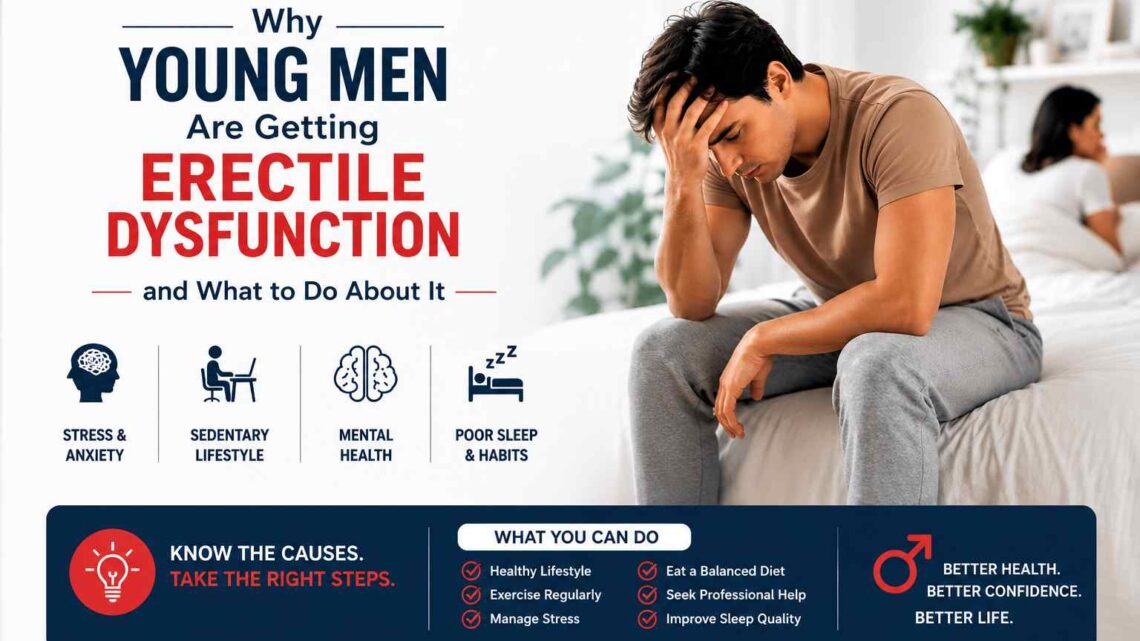
Why Young Men Are Getting Erectile Dysfunction and What to Do About It
May 18, 2026There was a time when erectile dysfunction (ED) was considered an old man’s problem. Doctors rarely expected to see it in men under 40. But that’s changing fast. Today more young men in their 20s and 30s are quietly dealing with erectile dysfunction in young men and most of them have no idea why it’s happening or what they can do about it.
If this is something you’ve been experiencing first you’re not alone. Second it’s almost always fixable. This guide breaks down the real reasons behind ED in younger men and more importantly what actually helps.
Is Erectile Dysfunction Really Increasing in Young Men?
Yes and the research backs it up. A landmark study published in the Journal of Sexual Medicine found that nearly 1 in 4 men seeking help for ED was under the age of 40. That’s a striking figure for a condition that was once considered rare in young adults.
Another large scale review published in Translational Andrology and Urology confirmed that ED prevalence in men aged 18 to 40 has risen significantly over the past two decades. Experts believe lifestyle mental health and technology are all playing a role.
Top Reasons Young Men Experience Erectile Dysfunction
1. Performance Anxiety and Mental Pressure
Your brain is the most powerful sexual organ in your body. When you’re anxious worried about how you’re performing, afraid of disappointing your partner and stressed about life in general your nervous system goes into fight or flight mode. That response shuts down the blood flow needed for an erection. Learn more about how to manage sexual performance anxiety and break the cycle.
This creates a cruel cycle: one bad experience leads to anxiety about the next one which makes the next one worse. Many young men end up stuck in this loop without ever understanding what’s really happening.
2. Porn Induced Changes in Sexual Response
Frequent pornography use has been increasingly linked to a condition sometimes called “porn induced ED.” The idea is that constant exposure to highly stimulating content can desensitize the brain’s reward system making real life intimacy feel less arousing by comparison.
While research in this area is still growing many sex therapists and urologists report seeing this pattern regularly in young male patients. Reducing or eliminating pornography often leads to noticeable improvement.
3. Poor Lifestyle Habits
Erectile function depends heavily on cardiovascular health good blood flow is everything. Habits that damage your heart and blood vessels also damage your ability to get and maintain erections. These include:
- Smoking (damages blood vessel lining)
- Heavy alcohol or recreational drug use
- Poor diet high in processed food and sugar
- Physical inactivity and obesity
- Chronic sleep deprivation
4. Low Testosterone
Testosterone isn’t just about muscle and mood it plays a direct role in sexual desire and erectile function. Low testosterone levels in young men can result from obesity, chronic stress, poor sleep, and underlying hormonal conditions. If your libido has dropped alongside ED symptoms, it’s worth getting your levels checked.
5. Depression and Chronic Stress
Mental health and sexual health are deeply connected. Depression lowers libido and can directly interfere with erections. Antidepressant medications while helpful for mood can also cause ED as a side effect. Chronic stress elevates cortisol, which suppresses testosterone and blood flow.
6. Underlying Medical Conditions
Conditions like diabetes, high blood pressure, and high cholesterol are increasingly common even in young adults and all of them can impair erectile function. For example, diabetic men face a much higher risk of ED and often need targeted support. If ED appears without an obvious psychological cause, a medical check up is a smart first step.

What Can Young Men Actually Do About It?
The good news: ED in young men is highly treatable. Here’s what works:
Talk to a Doctor First
Before anything else, rule out physical causes. A simple blood test can check your testosterone, blood sugar, cholesterol and other key markers. If a medical condition is at the root treating it often resolves ED naturally.
Address the Mental Side
If anxiety or performance pressure is the cause cognitive behavioral therapy (CBT) and sex therapy have strong evidence behind them. Even a few sessions can dramatically shift how your brain responds to sexual situations.
Upgrade Your Lifestyle
- Exercise regularly even 30 minutes of walking daily improves vascular health
- Eat a Mediterranean style diet rich in vegetables, lean protein and healthy fats
- Cut back on alcohol and quit smoking
- Prioritize 7 to 9 hours of sleep every night
- Reduce pornography consumption
Consider FDA Approved Medication If Needed
For many men, lifestyle changes alone aren’t enough especially in the short term. That’s where FDA approved ED medications come in. Sildenafil (Generic Viagra) and Tadalafil (Cialis) are safe well studied and highly effective when used correctly. They work by improving blood flow to the penis and are not addictive.
These medications don’t fix the root cause, but they can give you back confidence while you work on longer term solutions. Wondering how long Cialis lasts? It can stay active for up to 36 hours giving you more flexibility than other options.
When Should You See a Doctor?
You should speak with a healthcare provider if:
- ED has persisted for more than a few weeks
- You have little to no sexual desire
- You notice other symptoms like fatigue, weight gain or mood changes
- You have risk factors like diabetes or high blood pressure
- ED is affecting your relationship or mental health
Don’t let embarrassment hold you back. ED is a medical condition, not a character flaw. For a full overview of men’s sexual health problems and treatments doctors hear about this every single day.
Frequently Asked Questions (FAQs)
Q: Can a 20-year-old have erectile dysfunction?
Yes. Research shows ED affects approximately 8% of men in their 20s and up to 11% in their 30s. It’s more common in young men than most people realize and it’s often psychological rather than physical.
Q: Is ED in young men permanent?
Rarely. In the vast majority of cases ED in young men is reversible especially when addressed early. Lifestyle changes therapy and medication can restore normal function in most men.
Q: Can stress cause erectile dysfunction?
Absolutely. Psychological stress is one of the most common causes of ED in men under 40. Chronic stress raises cortisol lowers testosterone and constricts blood vessels all of which interfere with erections.
Q: Does masturbation cause ED?
Masturbation itself does not cause ED. However excessive pornography use combined with frequent masturbation may desensitize the brain’s arousal response over time making real life intimacy less stimulating for some men.
Q: Is it safe for young men to use ED medication like Sildenafil?
Yes, when prescribed by a doctor. Generic Viagra (Sildenafil) and Tadalafil are safe for healthy young men without contraindications. Always consult a healthcare provider before starting any medication.
Q: How long does it take to recover from ED?
It varies. Some men see improvement within weeks of lifestyle changes. Others may take a few months, especially if the cause is psychological. With proper treatment most young men recover fully.
About the Author:
This article was written by Hazel Oliver, Professional Medical Content Writer, after thorough research from peer reviewed medical journals, FDA guidelines, and authoritative clinical sources. Medically reviewed by Dr. Johnny Sins, Men’s Health Specialist. All sources are linked in the references section above.
Medical References
- Capogrosso P, et al. (2013) One Patient Out of Four with Newly Diagnosed Erectile Dysfunction Is a Young Man
- Allen MS, Walter EE. (2019). Erectile Dysfunction: An Umbrella Review of Meta Analyses.
- Hackett G, et al. (2018) British Society for Sexual Medicine Guidelines on ED
- Vlachopoulos C, et al. (2013) Erectile Dysfunction in the Cardiovascular Patient European Heart Journal
- Rajfer J. (2000) Relationship Between Testosterone and Erectile Dysfunction Reviews in Urology
- . NIDDK Erectile Dysfunction (Official Government Source)